Shipping Containers: A Buyer’s Guide to Sizes, Uses, and Site Prep
Need more room for tools, equipment, or inventory? A shipping container can put storage close to the work, whether that’s a construction site, school, public works yard, or commercial facility. But before you order one, make sure the size fits your materials, your site, and the way you’ll use it.
People often use “shipping container” and “storage container” to mean the same kind of heavy-duty steel unit. In this guide, we use both terms as customers do, while covering the practical questions to sort out before you buy or rent.
Start with what you’ll store
Make a list of what needs to go inside. Don’t stop at counting boxes or pallets. Measure the longest and tallest items, and note anything heavy or used every day.
A few things to consider:
- Dimensions: Check the interior measurements and door opening, not just the outside dimensions. The walls and doors reduce the usable space.
- Access: If people will be going in and out often, leave room to reach the items at the back. A fully packed container can be difficult to work from.
- Layout: Shelves, pallets, equipment, and walkways take up space. Sketching the layout can help you see whether a container will work before it arrives.
- Weight: Volume and weight capacity are different limits. If you’re storing heavy equipment or dense materials, ask about the specific unit’s ratings and delivery requirements.
Choosing a container size
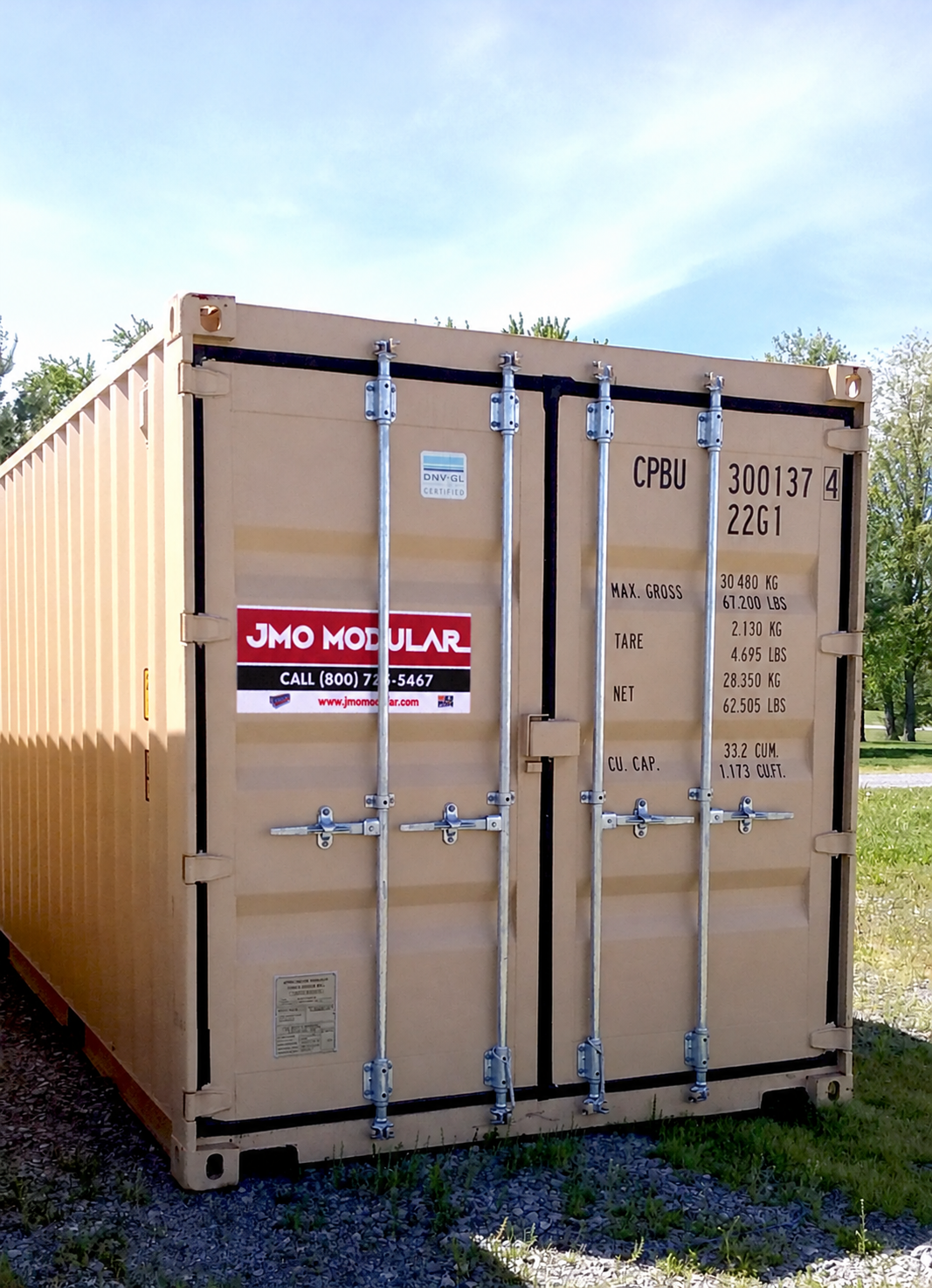
The most common comparison is between 20ft and 40ft containers. Both standard sizes are about 8 feet wide and 8 feet 6 inches tall externally. A 40ft container is about twice as long as a 20ft unit, with roughly twice the floor area and a little more than twice the interior volume. High-cube containers add height.
|
Typical container size |
Approx. exterior dimensions (L × W × H) |
Approx. interior floor area |
Approx. interior volume |
|---|---|---|---|
|
20ft standard |
20′ × 8′ × 8′6″ |
150 sq. ft. |
1,170 cu. ft. |
|
40ft standard |
40′ × 8′ × 8′6″ |
300 sq. ft. |
2,390 cu. ft. |
These figures are approximate. Exact interior dimensions, door openings, and usable capacity vary by unit. Check the specifications for the container you’re considering, especially if you have equipment or shelving that needs to fit precisely.
20ft containers
A 20ft container can be a good fit when you have a set amount of equipment or supplies and don’t want to give up more yard space than necessary. A construction crew might use one for tools and job materials; a school might store seasonal or athletic equipment; a facilities team might keep maintenance supplies close at hand.
40ft containers
A 40ft unit gives you more room for a large inventory, long materials, or supplies you want to keep together. It can also leave room for growth. The tradeoff is straightforward: you need a longer placement area and a clear path for delivery.
Think about how the container will be used
The best setup depends on the people using it and what they need to get to. For example:
- Job sites: Keep tools, materials, and supplies near the crew using them. Think about where the container can sit without blocking equipment or vehicle movement.
- Schools and campuses: Store maintenance supplies, athletic gear, event materials, or seasonal equipment. Consider access, visibility, and how deliveries fit around campus activity.
- Municipalities and public works: Keep park or maintenance equipment near the work area. Plan how staff will access and organize supplies, especially when they need to retrieve them quickly.
- Commercial facilities: Use a container for inventory overflow or equipment tied to a project. Compare the convenience of on-site access with the space the container will occupy.
- Renovations and temporary projects: Store materials near the work so crews spend less time making trips elsewhere. Make sure the placement won’t interfere with the project as it progresses.
Also consider the condition of the container and what the contents need. Security, ventilation, and moisture management may matter, and some sensitive materials need more protection than a standard container can provide. Ask what features are available and inspect the unit before committing.
Get the site ready
Choosing the container is only part of the job. The spot and delivery route need to work, too.
Pick a stable location
Look for a firm, level area that can support the loaded container. Avoid places where water collects or the ground shifts. Ask the delivery provider what kind of base or support is suitable for your site and the unit.
Check the delivery path
Measure the route from the entrance to the placement spot. Pay attention to gates, tight turns, slopes, overhead wires or branches, nearby structures, and the room needed for delivery equipment to maneuver. If you’re unsure, send the provider photos and measurements before scheduling.
Leave room to use it
Make sure the doors can open fully and people can move items in and out. Leave space for walkways, loading, and vehicle traffic. A container that technically fits may still be awkward if it’s squeezed against a fence or building.
Plan for access and upkeep
Decide who needs access and how the container will be locked. Keep the area around it clear and check the doors, locks, and stored items from time to time. If the contents need specialized protection, ask about suitable features or other storage options.
Buy or lease?
Buying and renting can both make sense. The better choice depends on how long you’ll need the container and how likely your requirements are to change.
Buying
Buying may work well for long-term or recurring storage. You own the unit and can plan around ongoing use, but remember to include delivery, site preparation, maintenance, and eventual relocation in your budget.
Leasing
Leasing can suit a temporary project, a seasonal need, or a situation where you’re not sure how long you’ll need extra space. Ask about the lease term, minimum commitment, delivery and pickup charges, and what happens if the project runs longer than expected.
Compare the full cost
Ask for comparable quotes for the same size and condition. Check whether delivery, placement, pickup, taxes, rental duration, and requested features are included. To compare floor-space value, divide the delivered cost by the usable floor area. That gives you a cost-per-square-foot estimate, but don’t let it make the decision on its own. Paying for space you can’t use, or choosing a container that doesn’t fit the site, can outweigh a lower rate per square foot.
Find a container that fits your project
Before requesting a quote, measure the items you need to store and the space where the container will go. Then compare sizes and ask for the full delivery or rental cost. A little planning up front can help you avoid paying for capacity you don’t need or discovering too late that something won’t fit.
Explore JMO storage containers and contact the team to discuss options for your site and timeline.
Frequently asked questions
Are shipping containers and storage containers the same thing?
People often use the terms interchangeably for heavy-duty containers used to store items on-site. If you plan to ship freight, confirm that the specific unit meets the requirements for the intended transport.
How much can a 20ft shipping container hold?
A typical standard 20ft container has about 150 square feet of floor area and approximately 1,170 cubic feet of interior volume. Actual usable space depends on the unit’s measurements, door opening, and storage layout.
Do I need a permit for a storage container?
Possibly. Requirements vary by location, property, use, and duration. Check with the property owner and local authorities before arranging delivery.
Should I buy or lease a storage container?
Buying can suit long-term or recurring use. Renting can be practical for a project or seasonal need. Compare the full cost, including delivery and any rental-term charges, with how long you expect to use the unit.